Bleach to remove mold is one of the most common misconceptions in home restoration. Bleach kills surface mold on non-porous materials — tile, glass, sealed countertops. On the porous materials where mold most commonly establishes after water damage in Miami-Dade homes — drywall, wood framing, insulation — bleach does not penetrate deeply enough to eliminate the problem. The mold comes back because the source was never fully addressed.
Understanding why bleach falls short helps Miami-Dade homeowners make the right call when mold is discovered after a water event.
Why Bleach to Remove Mold Does Not Work on Porous Surfaces
Bleach is approximately 90% water. When applied to a porous surface like drywall or wood framing, the chlorine evaporates quickly at the surface while the water component absorbs into the material — carrying moisture deeper into the same substrate where mold has already established. The mold root structures inside the material remain intact. The surface looks clean but the problem inside was never addressed.
This is why mold treated with bleach on porous surfaces commonly returns within days or weeks. The surface appearance changes but the underlying condition does not.
What Bleach Can and Cannot Do
On non-porous surfaces — sealed tile, glass, and metal — bleach kills surface mold effectively and is appropriate for routine bathroom cleaning. In those situations, mold has nowhere to embed and bleach reaches all of it.
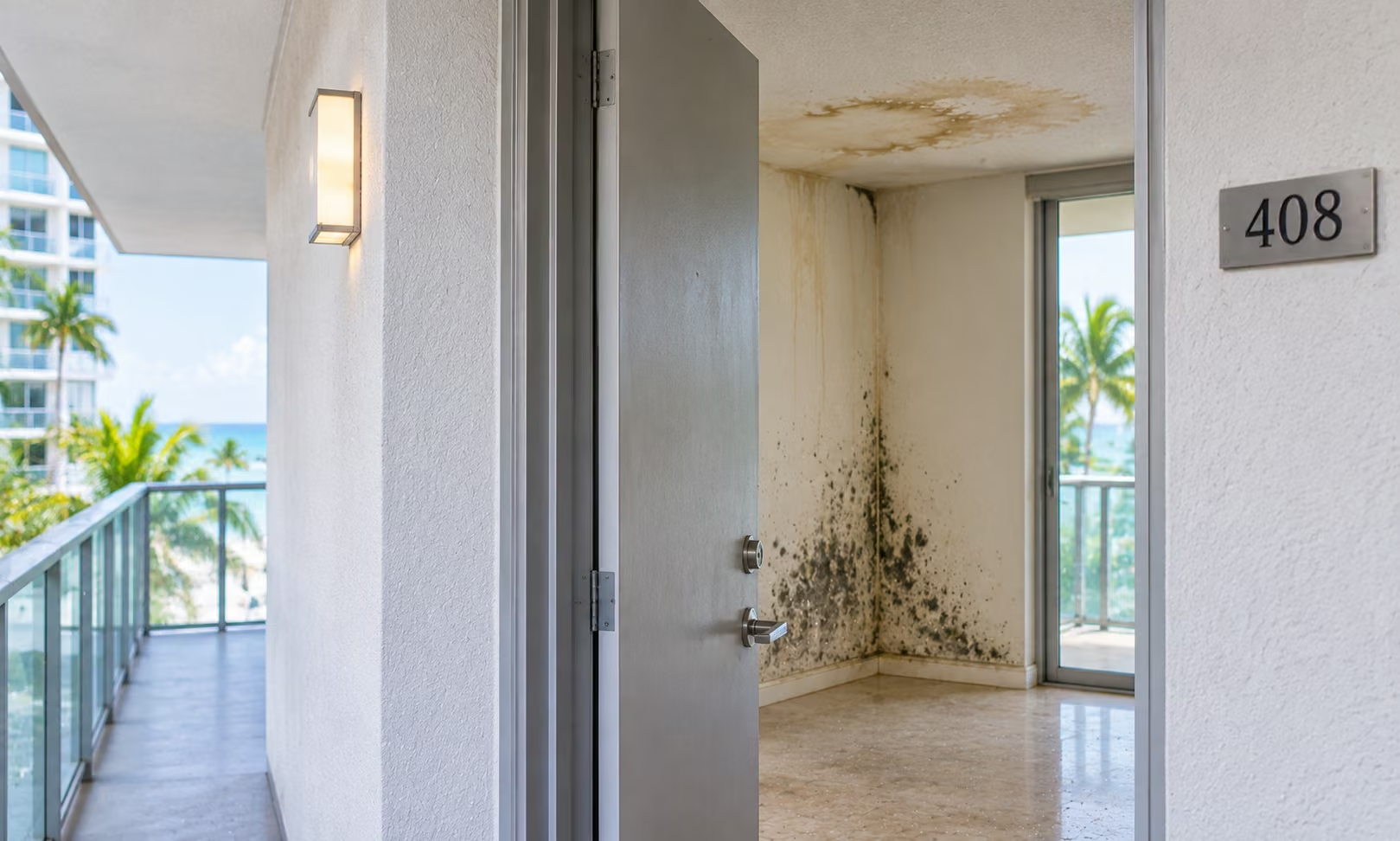
After a water damage event, mold almost always establishes inside porous structural materials. That is not a bleach problem — it is a remediation problem that requires removing the affected material and eliminating the moisture source sustaining it. Read our post on hidden mold after hurricane flooding to understand how deeply mold can establish inside wall cavities and structural assemblies after a water event in Miami-Dade.
The Risk of Disturbing Mold Without Containment
Beyond its ineffectiveness on porous surfaces, DIY bleach treatment carries a safety risk most homeowners do not consider. Disturbing a mold colony — whether with bleach, scrubbing, or any surface treatment — releases spores into the air. Without professional containment in place, those spores travel through the home and settle on new surfaces where they can establish new colonies.
Professional mold remediation begins with containment specifically because of this risk. Attempting to treat mold without containment — regardless of the product used — is one of the most common ways a limited mold problem becomes a whole-home remediation project. In Miami-Dade’s year-round heat and humidity, redistributed spores find ideal conditions on any surface with even minor residual moisture.
Frequently Asked Questions
Can bleach kill mold permanently? On non-porous surfaces, bleach can kill surface mold. On porous materials like drywall and wood framing — where mold most commonly establishes after water damage — bleach does not penetrate deeply enough to eliminate mold root structures. Surface mold treated with bleach on porous materials returns because the underlying problem was not addressed.
Is it safe to clean mold myself with bleach in Miami-Dade? Disturbing mold without professional containment releases spores that can spread throughout the home. For anything beyond minor surface mold on non-porous materials, professional assessment and remediation is the appropriate response — particularly in Miami-Dade’s climate where mold conditions persist year-round.
When should I call a professional instead of using bleach? Any mold that established after a water event warrants professional assessment. If mold has penetrated a porous material, if the affected area exceeds 10 square feet, or if mold has returned after previous surface treatment, professional remediation is the right call.
What Professional Mold Remediation Actually Involves
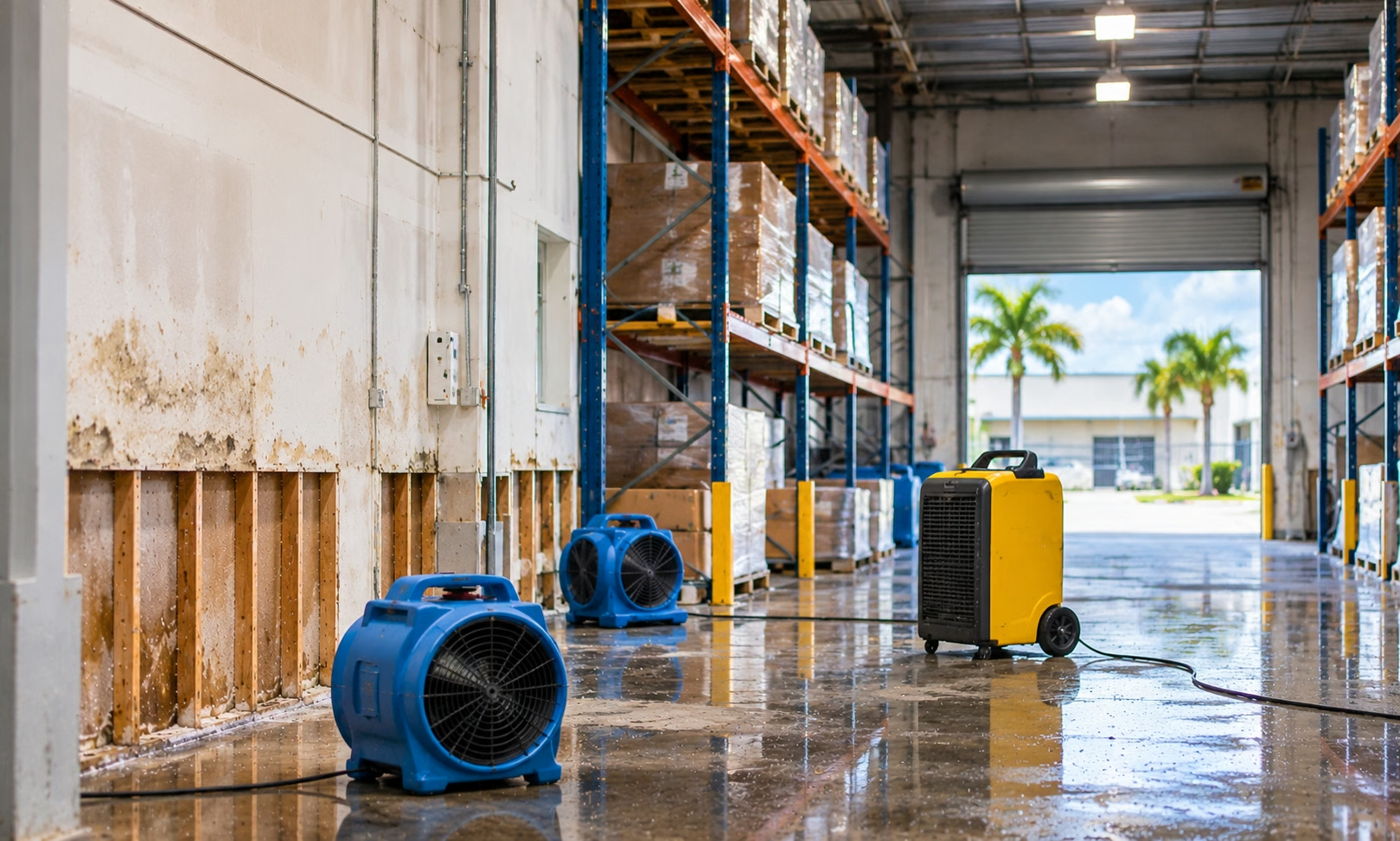
Professional mold remediation addresses the problem at the source — inside the material — rather than at the surface. Affected materials are removed under containment protocols that prevent spore spread. Structural surfaces are treated with professional-grade antimicrobial products. The moisture sustaining the mold is eliminated through structural drying confirmed by moisture detection equipment. Post-remediation testing confirms that spore levels have returned to normal before the area is cleared for reconstruction.
Surface cleaning with bleach cannot replicate any part of that process. Our mold damage removal services cover the complete remediation process from containment through post-remediation testing. Contact our water damage restoration services team if water damage has created conditions where mold may be developing — the sooner professional assessment begins, the smaller the remediation scope.
Bleach to remove mold addresses the surface — not the source. On the porous materials where mold establishes after water damage in Miami-Dade, the only reliable solution is professional remediation that eliminates the problem completely.
Call us the moment mold is discovered: 305-787-2260
Paul Davis Restoration of Miami Beach and Hialeah serves Miami Beach, Hialeah, Doral, Aventura, and surrounding Miami-Dade County communities.